Monday, January 26, 2026

Out on the ocean white

I finished the conversions to make HNLMS Java and De Ruyter this past week. Now I have 'launched' all of the Dutch ships that I require for the battles involving the 'ill-fated' American-Dutch-British-Australian Command (ADBA) of early '42.

L to R: De Ruyter, Java, Tromp and two Admiralen-class destroyers. All except for Tromp are only undercoated so far—'fitting out' (aka painting) will occur at a later stage.

Tromp, which I scratch-built and have featured in a post previously, is the only one of these ships that is completed. I built the two Admiralen-class destroyers late last year, simple conversions of the Tamiya kit of HMAS Vampire.

Looking more closely at the Admiralen-class destroyers
Photo of a simple 3D model of an Admiralen-class that I downloaded from the web. Prior to realising that I could adapt the kit of HMAS Vampire, I thought that I'd used this a a guide for a simple scratch-built version.

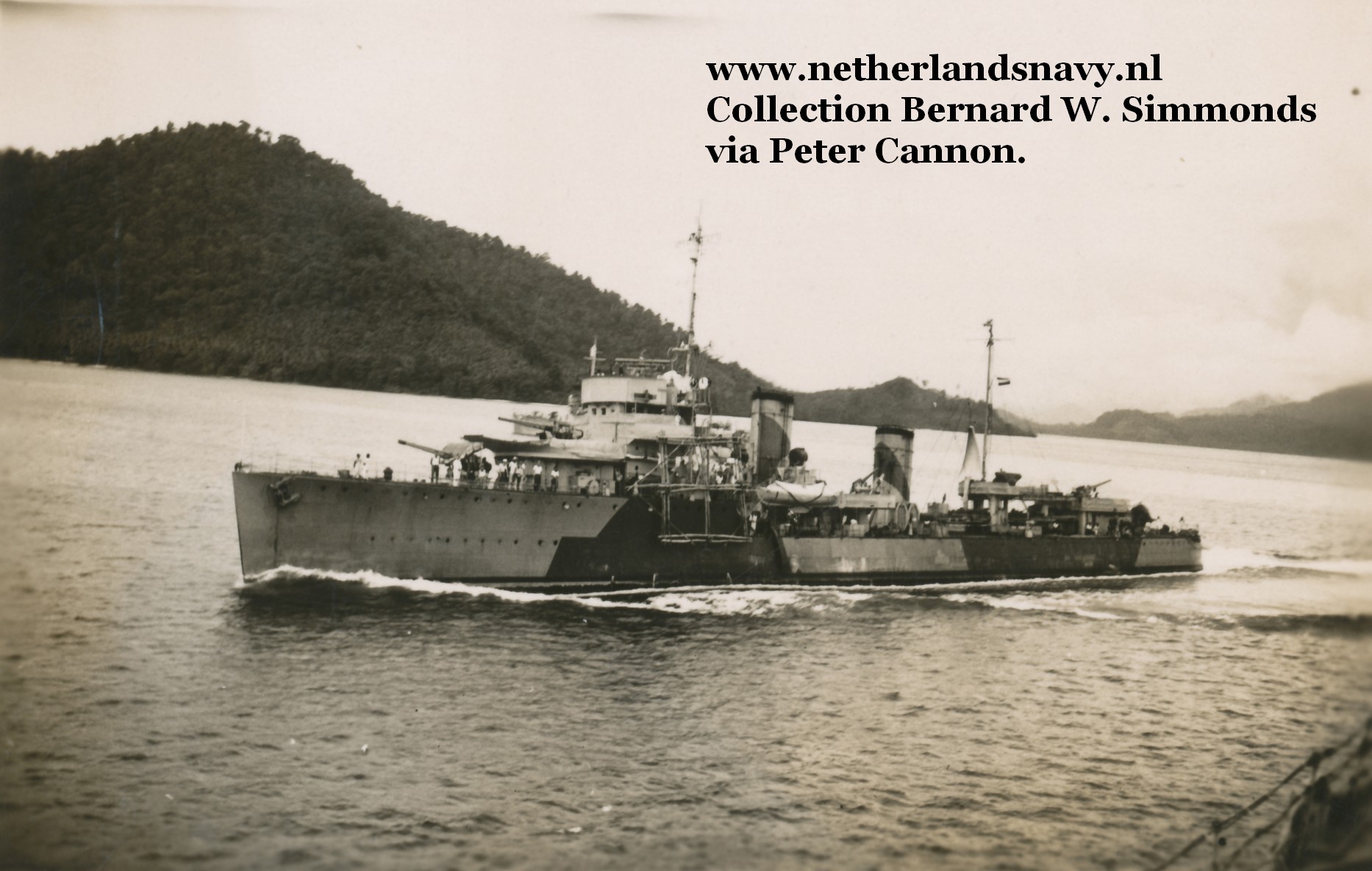
The real thing, in this case HNLMS Everston in 1942 (netherlands navy.nl).

I'm happy with the conversions to represent the destroyers as well as those of Java and De Ruyter. The former look better than that 3D-printed model and the latter two hold up pretty well against contemporary photos of the ships.


My version of HNLMS Java, from the port side.

From above. I am particularly pleased with the look of the 'wings' around the fore-funnel, which mounted anti-aircraft machine guns (you might have to zoom the photo to see them).

A photo of Java in 1942 from the website of the Australian War Memorial. Those 'wings' are clearly evident.

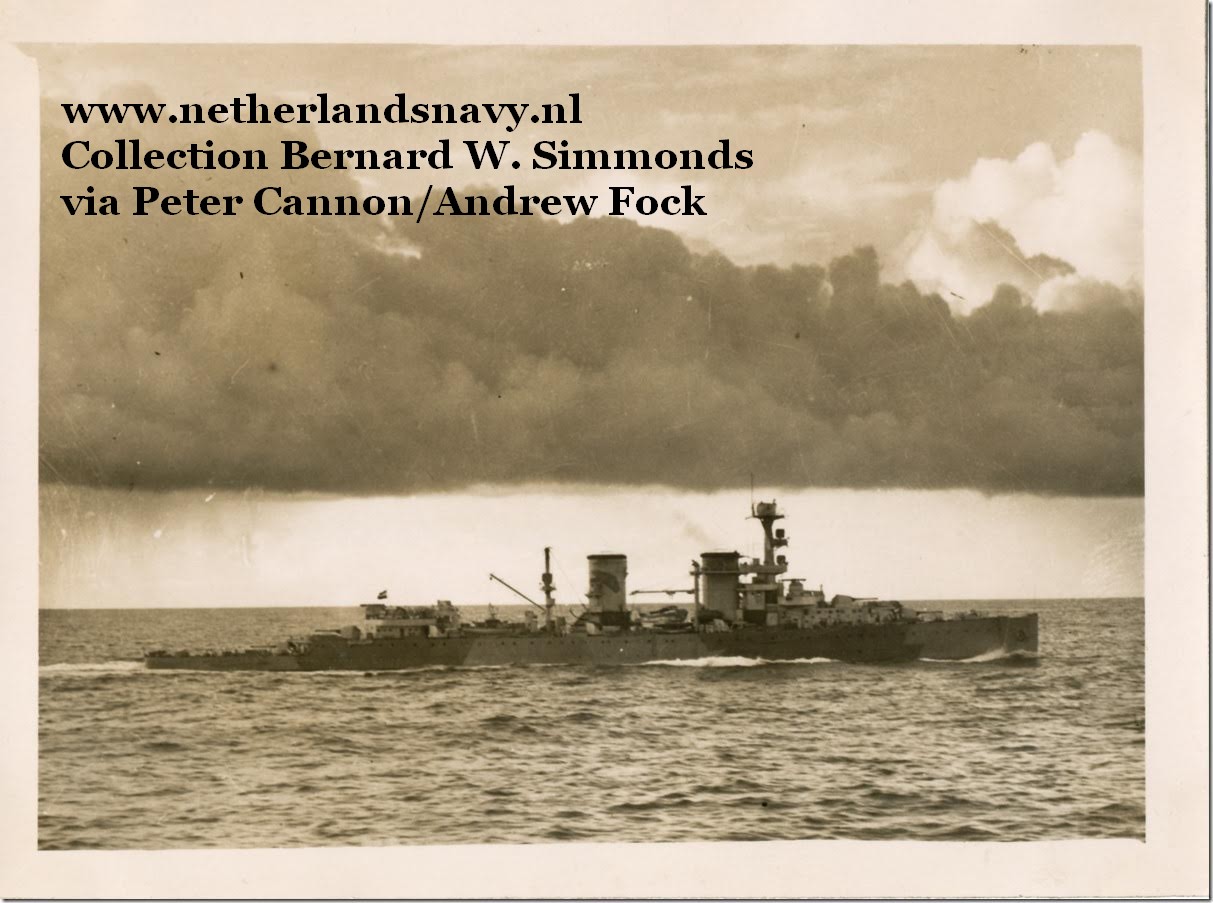
A photo of Java viewed from the starboard side (netherlands navy.nl).

Box-art of HMS Penelope, the kit that I adapted.

My version of HNLMS De Ruyter, from the port side.

And from above.

Box-art of HMS Ajax, the kit that I adapted.

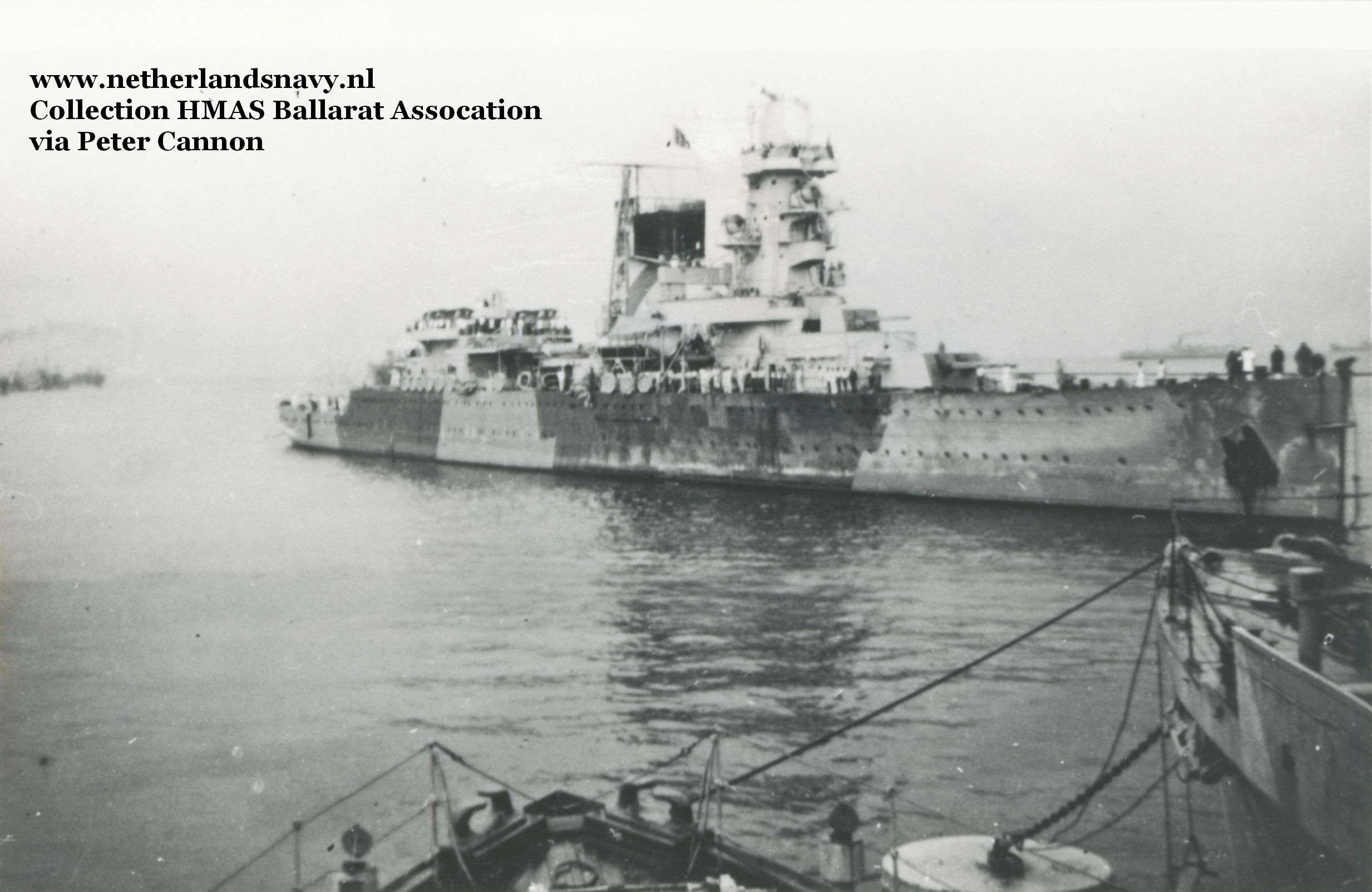
A photo of De Ruyter viewed from the starboard side (from netherlands navy.nl).

There are now 57 of the 70 ships remaining to construct (or 69 of the ultimate target of 82). I have six that I am building at the moment. Enterprise, Nagato and Kyokuto Maru are nearly completed and I expect to finish within the next couple of days—the latter is the first of the five Japanese fleet oilers that I am scratch-building. USS Pensacola, the first of three conversions of kits of USS Indianapolis (and the one involving the most alterations) is about 50% completed. The other two, which will represent Northampton-class cruisers, are in the early stages of construction.

I am quite obsessed with making these ships at the moment and spending more than a few hours a day on them. The combination of the target, challenge, interest and pleasure are driving me on. Added to this I am finding it really enjoyable and rewarding, with tangible results at every stage! 

Sunday, January 18, 2026

Ship building on target

As anyone who has set milestones, deadlines or other targets will know, the trick is to aim low, or at least below the best/most that could be done, so as to be able to over-achieve—under promise and over-deliver! Such is the case with my self-appointed target of 70 ships to be built in 90 days. I would like to average one per day, or close to it, but even I am realistic enough to know that I won't build one every day, so having 20 days 'spare' should provide sufficient latitude.

Recently constructed ships. From left to right: scratch-build Francol and Anking, three Kagero-class destroyers and two Fubuki-IIs, a couple of Japanese oilers/seaplane carriers, two transports and five Sims-class destroyers at the right.

I was going at a ship per day for the first five days of January (helped by having 'cheated' and built a couple in late December, haha), but then 'lost' nearly a week around 5th–11th as I had a visit by my brother from Queensland. He had come over to buy a car and then to drive it home (as you do). We had a top few days getting stuff for his trip, going to a couple of nights of speedway and generally have wonderful bro' time. Building 1/700 ships was not on the programme.

I have now caught up (basically), thanks particularly to building five Sims-class** destroyers. Amazingly, these are the first US ships that I have built. The other 26 US ships in the combined collection that have been 'constructed' comprise eight built previously by Julian and 18 x 3D-models that I bought (so no assembly required).

[**I crack myself up by calling these 'Sums' class, in my best Kiwi accent, in reference to 'Detictive Sums'; specially for Keith and others, like me, who enjoy the marvellous banter and humour of Brokenwood.]

My 'flurry' over the past few days means that I am now down to 59 of the original 70 ships to be built by the end of March. That's 59 to be built in 72 days, so my target is looking good.

Currently building: HNLMS Java and De Ruyter (as conversions of HMS Penelope and Ajax),  five scratch-built Japanese oilers (one in foreground) and then three kits of USS Indianapolis to convert to USS Pensacola, Houston/Chester and Northampton.

The next 10 ships could be the most challenging of all, since they are conversions or scratch-builds. I am progressing with the first two, conversions of HMSs Penelope and Ajax to HNLMSs Java and De Ruyter respectively, as well as the first of five Japanese oilers that I will scratch-build. Following these I'll do conversions of three kits of USS Indianapolis into a Pensacola-class and two Northampton-class cruisers.

I am hoping that I'll complete these ten by the end of the month, which would leave me with 49 more to build in 59 days. I did quite a bit of work on Java this arvo' after finishing the last two Sims class destroyers, so am feeling quite confident that I won't need 13 days for them.

Next in line: ships for Pearl Harbor—the Japanese battleships of the first and second divisions for the 'climb Mt Niitaka' bit# and USS Enterprise along with here cruiser escorts (described above) which, along with the Sims-class destroyers, form her carrier group for alt.-Pearl Harbor. We'll do the re-fight of the attack on Pearl Harbor at 1:6000, so I don't need the ships that were there (and they did not feature prominently later in the war after being repaired).
#Absent: Fuso, which is one of the eight that I am yet to purchase. I won't bother with Mutsu (sister to Nagato) as she did not feature at all in later actions of the war and was sunk in home waters after a mysterious explosion.

Following that: Japanese ships for the attacks on Wake Island (through to its eventual capture).

Then we have: ships needed for Sinking of Repulse & Prince of Wales, Operation C, Java Sea, Sunda Strait (others have or will have already been constructed). A notable absence is HMAS Perth. This is not counted in the 70 or the 82 since a model is not yet available in 1/700. A kit of HMAS Sydney is being produced by Flyhawk and will hopefully—HOPEFULLY be released soon. I'll use it to represent Sydney, Perth and Hobart.

Finally: ships for Coral Sea and the actions of '42 which followed. Hatsuharu is missing from this lot, yet to be purchased.

Of course, my ultimate construction target is 82, which includes another 12 kits that are of ships that did not 'feature' until 1943 or later. I cannot see myself stopping before I have built these too and I am determined that I will build ’the lot’, while I am in ship building 'mode'. Mind you, I am yet to get hold of eight kits: two of which are part of the 70, six to make up the 82. They are not yet available in Oz, but hopefully they will be by the end of February at the latest. This is based on the expected date shown on the website of one of the shops over east (I have them on order from my 'local' shop in Perth, but they use the same suppliers).

Then there is HMAS Sydney/Perth/Hobart...

Monday, December 29, 2025

Powering on with the Pacific Fleets

I am powering on with the Pacific Fleets in 1/700. Current total 168 with 8 more ordered. Of the 176, 70 are yet to be ‘launch’ (built) so as to have all that I ’need’ for the battles of ’41–’42, with another 12 more after that, selected from the many, that joined those of the earlier ships that were still afloat for battles in ’43 to ’45.

Completed scratch-built ships to date (L to R, from front) MMS51, HNMLS Tromp, HMS Tenedos, HMAS Yarra, with constructed HMS Anking and RFA Francol that are being ‘fitted out’ based on the photos behind.

Most of the ships are model kits, with 28 3D-models and 11 scratch-builds. I have built six of these, with five more planned, to cover ships that I want to represent that are not available in kits (or conversions from existing kits). I am pretty pleased with the results.

HMAS Yarra

HNMLS Tromp

MMS51 (simply a ships' boat from a carrier or battleship (I cannot recall which), painted and based.

I am gonna keep going with making these ships until all are constructed as I think that if I stop, I may not get back to them with the same focus. I have set an ambitious target to 'average' around one per day, so want to have them done by the end of March—70 ships in 90 days. I am presuming, based on experience to date, that I can average more than one per day in the case of smaller ships, with more time needed for carriers, battleships and larger cruisers. I'll paint bits of some, perhaps even completing a few, as I go along, but most of this will be done later on an 'as needs' basis for each action in the chronology.

Like all plans, it will likely fail, but at least it gives me a target and end to this being my main focus. Not that I don't enjoy it, just that I wanna do other things too! 😃

Thursday, November 13, 2025

Fleet update and hunt for the Bismarck (alt.)

I bought the Pacific Ocean last weekend. It's a lovely shade of blue and only cost me $22. What a bargain.

Another step in 'capacity building' so as to be able to work through, chronologically, all of the naval actions of the Pacific War. So too is the construction of 1/700 ships that has occupied much of my hobby time since my long latent interest in carrier actions was kicked into action in April. I have a goodly number now assembled (i.e. 'launched') and now being 'fitted out'.

Julian and Stephen came here yesterday and we played out an alternative scenario of the hunt for the Bismarck that Julian had devised. I took advantage of the cleared table and placement of my sheets to represent 'northern' oceans to do a photo shoot.

1/700 Japanese ships that I have 'launched' (made) since April, now being 'fitted out'. From port to starboard: Kongo, Akagi, Kaga, Soryu, Hiryu, Shokaku, Zuikaku, Tone, Haruna (fore) Taiho, Junyo, Ryjo, Furutaka, Kinugasa, Taiyo, Shinano, Kiso, Yahagi (aft).

I have also made my first scratch-build ship: HMS Tenedos. She was an Admiralty 'S' class destroyer of First World War vintage that did not have a long career in the 'Second War', having been sunk in the destruction of Force Z by the Japanese in late 1941 (better known as the sinking of Prince of Wales and Repulse)*. As such, and since I could not find an appropriate kit, it seemed a perfect subject for scratch-building.

[*No she wasn't, I mis-rememebered. She detached and was attacked by Japanese planes, but was unharmed. Her sinking was in April '42 during 'Operation C' off Ceylon (Sri Lanka)]

HMS Tenedos scratch-built. Scaled image printed on light card, stuck around a hull cut from mdf, with plastic parts used for boats, guns, search lights and mast/flag poles.
The gaps for the water to come in (😳) are not as obvious to the eye as they are in these photos!

It's nothing like the fabulous pre-dreadnoughts that people like Ion and Jim build and I 'cheated' and used scaled, printed images on card as the basis, but I am pleased with the result, nonetheless. Some of the 'spares' that are provided with 1/700 ship kits were perfect for some of the 'fittings and fixtures', making adding those details much easier.

I have scaled and printed images to build HMAS Yarra and HNLMS Tromp as my next scratch-builds. Similarly these had brief careers in the Second World War. HMAS Yarra was involved in an heroic but ultimately doomed attempt to protect the Tjilatjap convoy, 'charging' at the larger and superior Japanese forces of three Takao class cruisers and two destroyers in a valiant but ultimately futile attempt to defend her charges that had been told to scatter. An amazing story in the annals of the RAN and one that I look forward to recreating on the tabletop.

Scaled sides and deck of HMAS Yarra, cut out ready to glue onto the mdf hull that I have cut out.

HNLMS Tromp, scaled and printed.

HNLMS Tromp was part of the ill-fated American-Dutch-British-Australian (ADBA) command which was effectively wiped out at Java Sea, Sunda Strait and second Java Sea as part of the Japanese sweep south in early '42. She was 'lucky' being badly damaged by the Japanese destroyer Asashio during the Battle of Badung Strait, she was sent to Australia for repairs and survived the war. Once again, I could not find an appropriate kit for this ship, so scratch-built it is.

Hunt for the Bismarck (alt.)

Julian devised a fictitious scenario for us to use as a further test/familiarisation with Seekrieg 5. The Bismarck and Prinz Eugen successfully evaded the Hood, Prince of Wales and co. and have made to the Atlantic in search of convoys to prey on. They found one, 'cept it has HMS Revenge and Cornwall as escorts. These RN ships head out to intercept the German raiders so as to protect their charges.

HMS Revenge ahead of HMS Cornwall, with Bismarck (to starboard) and Prinz Eugen aft or her 18 000 yards distant.

The ships engaged one another at 18 000 yards, pairing off as Bismarck-Revenge and Prinz Eugen-Cornwall. Julian and I played two turns of firing before Stephen arrived. Just as well as it took us a little while to re-calculate the scale for movement and ranges and then to get our heads 'into gear' with the charts, but after the first fire that we tested (from Revenge as it turned out), we were off and running and it flowed brilliantly from then on.

We actually, incorrectly 'fired' twice the number of shells in the first turn, so counted this as two. This produced effective shooting by both sides, with damage inflicted on all by all, most serious of which was a small fire on Bismarck and damage to her rudder. Yes, the rudder again, just like in the historic action!

Bismarck (to port) with smoke from the small fire in her superstructure.  One of her rudders was also damaged.

Fortunately, I was able to extinguish the fire on Bismarck and we happily proceeded straight ahead, so this did not affect the German side too much, for now.

The exchange of fire and hits continued. This time Bismarck managed to knock Revenge's 'Y' turret out of action (turn 3) and followed this by knocking out a boiler (turn 4). For her part Prinz Eugen, despite some of her shells passing through Cornwall's weaker armour, caused flooding to one of the latter's engine compartments and knocked out her 'A' turret.

For their part the British ships inflicted minor damage on the Germans (turn 3) and most of their shells missed their targets (turn 4). Accumulated damage was building up on the British ships and the German commanders were confident that the action would soon come to a successful conclusion.

'Twas not to be. The British found their targets again, taking out Bismarck's D battery and temporarily suspending command with a hit to the bridge (both Admiral Lütjens and Captain Lindemann unharmed). Prinz Eugen was not spared, losing 'C' turret.

The pounding went on, each on the other, but, a chance shot from Prinz Eugen produced a magazine explosion on Cornwall. Stephen had rolled a 01, yielding table 100 as the damage effects table. Just like at the historic Denmark Strait, except that it was a hit from Prinz Eugen on Cornwall rather than Bismarck on Hood.

Ka-

boom! HMS Cornwall's magazine explodes.

Thick, black smoke soon filled the air.

This left Revenge alone, now with only two effective turrets with which to respond.

Furthermore, the damage to Revenge was increasing (she had reached tier 10, the top level in Seekrieg). The ship was falling apart, fire control gone, command suspended, crew casualties mounting and then, uncontrolled flooding. She settled in the water and would sink, 20 minutes later, the order to abandon ship having been given and carried out.

Having dispensed with the British ships, the Germans planned to go in search of that convoy. Or at least, Prinz Eugen would. Bismarck had also suffered from hits and accumulate damage. In addition to her damaged rudder and 'D' battery being out of action, she had flooding in some of her compartments, resulting in her listing to starboard. She would make for port in France, hopefully protected in her progress by a cordon of U-boats, but with the Royal Navy and Air Force sending out 'everything' in hope of intercepting her. 

Once again we enjoyed greatly the sensible detail and narrative aspects of Seekrieg. They are 'involved', as I have mentioned previously, but not difficult. There are a lot of dice rolls; to hit, hit location, damage, possible critical hits (damage effects) and which specific damage effects table is to be consulted, but they are dice rolls with a purpose (and two D10s read as a percentage), not merely grabbing a handful of dice and counting 5s and 6s, or whatever, in a completely random manner.

Details

Rules

Ships
1/6000 scale Figurehead Ships.

Sunday, November 9, 2025

Operation Z or planning Operation AI: constructing the Kido Batai (2) the pleasure of little things

When I first began acquiring these 1/700 models, I wondered why there was such a range of prices for, seemingly, the same model of the same ship. Then I realised that some are more detailed than others. Fujimi in particular seem to specialise in the detailed end of the spectrum (with associated higher prices), but even within the same manufacturer there are standard and 'deluxe' versions of the same kit.


Being a cheap skate and only wanting 'wargame standard' models, I purchased the cheapest kit that I could find for each of the ships. As I became aware of the differences and since I was struggling to find any of the 'basic' versions available, I decided to splash out and purchased the Fujimi version of Soryu—added incentive was that is was available at a discounted price 😁. I have enjoyed and at the same time struggled with construction of this more detailed kit. 

The added detail comes in the form of more and smaller parts to the kit that provided a more accurate and detailed representation of parts of the ship. Part L48 is an example. These are fire controllers which go on each ack-ack platform, and elsewhere.

A section of the instructions showing placement of two of part L48.

Here they are on the sprue. Tweezers for size. Other detailed parts on this sprue include the ladders at the ends of various gangways around the top of the hull, below the flight deck (parts L16–L32).

There were 21 pieces of part L48, the little darlings, to glue on to various platforms and other fixtures below the flight deck and a couple on and near the island. Fiddly in the extreme, but they were not as difficult to fit in place as I had thought they would be when I saw the size of them. The nature of the polystyrene cement, which becomes 'tacky' almost immediately was a great aid to this, allowing one (me in this case, haha) to simply drop them on top of a dot of glue and then slowly and carefully adjust the position and make sure that they were vertical. Remarkably none of them went 'ping', propelling out of the grip of the tweezers, flying across my table never to be seen again. This has happened several times with parts from each of the other kits that I have made—particularly the wing floats of the float-planes, which were the smallest parts (2–3 mm long) that I had handled prior to L48. Perhaps I was especially careful when handling these controllers? 


Fortunately, most of the models that I have made are of the ilk of the more pragmatic Aoshima Hiryu.


Note the little vertical bits moulded on part A7, a more stylised representation of the fire controllers!

There was some added detail in the Soryu kit that I decided not to attempt:

I wondered at first what the millimetre sized parts on these small sprues were. A small information box at the end of the instructions exclaims: "Upgrade parts for precise reproduction of machine guns!"


I later saw the photo on the outside of the box: "Includes 25mm machine guns (triple, twin, and single), bulletproof plates, and ammunition boxes".

Nah. Too small and fiddly for me. I stuck with the basic, moulded version of the machine guns that was provided (part F2).


While pleased to have bought one of these more detailed, Fujimi, 'proper scale modellers' models, I was equally pleased that I only bought one (plus the two Kongo battleships that I had already built and which were far less fiddly).


With the six carriers built, it's time to stop building and do some painting, for a needed change of pace! 😁


Monday, September 1, 2025

Operation Z or planning Operation AI: constructing the Kido Batai (1)

Preparations for recreating the attack on Pearl Harbor in miniature have begun apace; a slow one!

Fun with 'pagodas'. The Kongo-class had these crazy-tall superstructures nicknamed pagodas that came about, as far as I can tell, through successive stages of modernisation adding features of fire control, communications and, eventually, radar. This aspect really comes through in making the kits. Also in the photo: showing that the manufacturers of the kits have a sense of humour. Not satisfied with having tiny-wee parts to remove from the sprue and try to glue on—without having them 'ping' into oblivion as they spring from the tweezers that one is using to put them in place—in this case, they moulded the ones for the float planes, including tiny wing floats, in that translucent, pseudo-glass-plastic!

I have decided on a bit of naval jargon for my ship building. Purchasing the kit—a.k.a. the easy bit—will be 'laying down the keel'. Beginning construction (particularly the hull) will be 'launched'. Completing construction of the model will be 'completed' and finishing painting it will be 'commissioned'. As with the real thing, the period of 'fitting out' between the second last and final stages takes some time! 😊

Two Kongo-class battleships 'completed'. The kits are for Kongo (foreground) and Haruna (background), but I will happily use them for others of the class. For the Kido Batai for Pearl Harbor, they will be Hiei and Kirishima respectively.

Today the second of two Kongo-class battleships was 'completed'. The models of these battleships are the first Fujimi kits that I have purchased. They are generally too expensive for my tastes (about double the price of other kits). I was able to get these two on sale, so similarly priced to others that I have bought. I can see why they are more expensive. They are far more detailed than the other kits that I have done. This is beaut for scale modellers, but not particularly needed (nor really desirable?) for wargame purposes. Nevertheless I enjoyed making them and am pleased to have all that extra detail in the finished models. Like all of these kits, I hope that the delicate parts will survive use on the tabletop. I guess we are a bit more gentle with them than a kid 'sailing' around on a bedroom floor, but it is still more use than merely sitting on a shelf or in a cabinet.

This means that I now have Shōkaku and Zuikaku being 'fitted out', Tone and the two Kongos 'completed', ready for 'fitting out', and Kaga's 'launched'. 'Only' two more cruisers, another Tone class (Chikuma) and the light cruiser Abukuma, plus three more carriers, eight destroyers and some representations of tankers to go! 😳😀

What a carrier-obsessive wargamer sees

We've had a drought this year. Not no rainfall, everything dying-level of drought, but a prolonged period of below-average rainfall nonetheless. This was alleviated to a great degree last month with some good falls and a total of just over 80 mm. This provides me with a couple of nice 'snaps' that I have taken and can include here.

Good rain across the system meant that the Avon River near us went from a dry river bed, to a trickle, to water flowing from bank to bank.

It has also given the crops around the place a big boost.

We 'all' (I think) have a tendency to see potential terrain in packaging, things around the garden or elsewhere in 'the environment' and look at the lay of the land, potential good ground for cavalry or for sighting guns, when walking in open spaces (or bush).

Some crops on hilly country or paddocks that have become too wet are sprayed from the air.

Now, when I see a plane, I am counting the seconds and imaging how long it would remain in the sights of my carrier's anti-aircraft batteries. Oh dear!

(I counted about 9 seconds for the one pictured above; 1 1/2 turns!!)

Friday, August 22, 2025

Attack on Shōkaku

Yesterday we tested the system for a detailed air to sea attack and it worked a treat! Like so many plans, it had been in 'gestation' for a while, then came about quickly.

Yorktown's Scouting Five (SB-5) approach Shōkaku, which is closely followed by Kinugasa and Furutaka. The models were simply placed on the table at this stage and adjusted to the scaled distances before we began.

After our second go at Denmark Strait and successful initiation into the world of Seekrieg 5, Julian and I had planned to have a catch up for a build 'n chat session and/or perhaps a first go at a carrier action. Then, opportunity knocked. We were both available on Sunday and Thursday. We used the latter for the former and the former for the latter—clear?

Amongst all this I had made a bit of progress with how to do a carrier action in detail. It was/is chiefly a downscaling of Seekrieg 5, with added Scramble! for air to air combat, plus a few house rules for taking off and landing and to allow for the reduced time scale. Finding two sensational videos helped this immensely:


I came across these gems in response to a search trying to determine how long it took for various operations on a carrier. There is some amazing footage in these, but also a key observation: six seconds. Counting as the video played and/or looking at the time track, I realised that so many things fitted into this time (or multiples of it). Launching planes, landing a plane, dive-bombing, fall of bomb. I had been going to use 10 seconds per turn, the nominal length of a turn in Scramble!, but six will be the number of the counting and the number of the counting will be 6. That's 20 turns of this for a turn of Seekrieg 5 and near-as-damn-it the same as a nominal turn in Scramble!

Epiphany achieved, there was much to do. Firstly, forming ideas and notes into a sensible set of rules/guidelines to use. I produced a first, rough draft by Sunday, but it required that extra effort for the last 10%. Then there was the 'equipment' for the tabletop; stands already constructed (fortunately), but still planes to be painted and mounted so as to go on the stands, ships to be painted and the details of the historic action extracted from my sources. A little bit more pressure was added since we'd be three.

With a game planned, I let Stephen know and asked if he'd be interested to join us, telling him that it would be a test and that we are deliberately taking a detailed approach, each turn representing six seconds. He was a willing to be a 'bunny' too. Marvellous. But, given that he was travelling the 100-odd km for the game it had to be worth his while.

The stands were completed previously (well known to readers of this blog).

Planes needed to be painted and have bits of magnet glued on so as to be able to sit on the stands. A first coat of paint completed the night before, gluing the morning of: JIT* logistics!
(*Just in time)

Ships had been assembled, but could do with more paint. Only a bit more was done in time, so would have to suffice for the occasion—not quite JIT. Left to right: Kinugasa, Furutaka, Zuikaku and Shōkaku.

My 'resource gathering' for this entire recreation-in-miniature of the naval actions of the Pacific War has been chiefly focussed on the ships. A lot of good quality information, first-hand accounts and declassified reports (in English) are available on the interweb on sites like the Naval History and Heritage Command, US Naval Institute, plus websites compiled by enthusiasts, including the NavWeaps and the Imperial Japanese Navy Page. I have found some excellent articles from journals such as the Naval War College Review on these sites and others, but you still can't go past a good book. For the early war, John B. Lundstrom's two volumes "First Team : Pacific Naval Air Combat from Pearl Harbor to Midway" and "The First Team and the Guadalcanal Campaign : Naval Fighter Combat from August to November 1942" are the duck's nuts. The relevant pages of Volume 1 would be our guide for the action.

Lundstrom's sensational The First Team: our tour guide for the day.

The Japanese fleet, 'steaming' south at 30 knots so as to reduce the gap to their attacking planes, had become terribly strung out. "Taking the lead were three destroyers; then came the heavy cruisers Myōko and Haguro of the 5th Cruiser Division. The Zuikaku sailed about 10 000 meters [sic.] ahead of the Shōkaku, and nearly the same interval separated the Shōkaku from the heavy cruisers Kinugasa and Furutaka bringing up the rear" (Lundstrom p. 228). So, at our scale of 1:700 Shōkaku would be the only ship on the tabletop.


Seeking shelter from the in-coming planes, Zuikaku sailed into the front to the south...

and disappeared from view, taking the four Zeros that she was yet to launch.

Around 10 000 m north, Shōkaku her remaining two Zeros ready to launch.

She was not entirely alone, "at low level were five Zeros in two shotai led by PO1c Minami Yoshimi and PO1c Miyazawa" (Lundstrom p. 228). Another two Zeros circulated at nearly 13,000 feet (~4 000 m) above Shōkaku and PO1c Iwamoto Tetsuzō with his two wingmen from Zuikaku were also aloft.

Having circled for sometime, hidden in clouds to the southeast of the Japanese carrier, Burch's Scouting Five prepared to attack.

Seeing the SBDs dive to the attack, Iwamoto' shotai plunged after them.

Iwamoto "...ripped into a firing pass on the lead bomber, which happened to be Burch's Dauntless, opened with his 20-mm cannons at close range, and flashed past, certain that he had downed the American" (Lundstrom p. 230). 

Action a plenty. Burch and Jorgenson have dived on  Shōkaku, Iwamoto and co. attacking them as they did. Shōkaku launched the first of her remaining fighters, as the Zeros defending the carrier circled overhead.

In the historic action, Iwamoto missed, but in ours he hit, causing 8 points of damage (against a possible 17) peppering Burch's machine with holes and increasing its stall speed. In the historic action, it was Burch's wingman, Ens. John H. Jorgenson, attacked by Iwamoto's wingmen, whose plane was damaged, but he escaped unscathed in ours. As with history, the two Dauntless completed their dives and released their bombs which fell in the Coral Sea around Shōkaku, escaping the anti-aircraft fire from the carrier as they attacked.

Shōkaku launched her remaining Zero. Beautifully captured by Vice Admiral Stephan-san.

The next three Dauntless dived on the carrier, similarly missing,... 

but not all escaped the AA fire—a 1 in 100 hit! One of the Dauntless, badly damaged, disintegrated moments later, her crew successfully ejecting into the Coral Sea.

There was more happening. One of the Wildcats escorting Scouting Five dived to attack the defending Zeros, missing his mark. The four Zeros from Zuikaku entered the 'arena', The remaining pair of Dauntless from Scouting Five prepared to dive...

What a marvellous thirty seconds that was! Not a heap of photos, but plenty going on. We had planes attacking carriers, in air to air 'jousts', anti-aircraft fire from the carrier, planes taking off, some damage and a plane lost.

We debated for a while the fate of the pilot and gunner of that ill-fated Dauntless. Would a Catalina or such be sent to their rescue, or were they to be casualties? I expected the latter, Julian argued strongly that a search would be sent once the entire battle was complete "the morale effects of 'no man left behind'". It remained unresolved and a story for another time...

With set-up, discussions, lunch and then getting right into the swing of it, there was not time to bring in the remaining 17 Dauntless, nor the 9 Devastators, but the test was enough to show that the system would work. A few tweaks and adjustments had been indicated in this first outing, but it had survived first contact with the 'enemy'. With better preparedness, a complete (part) action such as the attack of the Yorktown group on Shōkaku could be carried out in a single session. It is unlikely that the attack by the Enterprise group could also be done—although you never know, I guess—but that's fine. The attack of the two groups occurred over some 40 minutes (400 turns!), so I'd expect at least two-sessions to complete it.

Julian said to me afterwards, "You must have been worried that it would not work and  pleased that it did?" In fact, I was not. More dangerously, I was convinced that it would work—so set up for disappointment. Part of that confidence was that it was based on a sound footing (Seekrieg 5) with added/adapted bits based on historic information.

This test completed and 'resources' gathered(ing), it's time to systematically get on with construction of the fleets, terrain (firstly Pearl Harbor, which we'll do chiefly at 1:6000) and making notes to produce a scenario/guidelines for each action from 7/12/41 on—at a slow but steady pace.

Construction of the fleets will continue, systematically by action, at a slow but steady pace.

Details of the game

Scale
Models are 1:700, each turn represents 6 seconds, 1.5 mm = 1 yard, planes and ships travel 5 mm per 1 knot (10 mm per 2 knots).
Vertical scale nominally 1:20 000, except for 'wave-top' height which is represented at 1:700.

Rules
A descriptive game adapting Seekrieg 5 to reduce the length of a turn from 2 minutes to 6 seconds, all assessments and movements done by individual plane (and ship), torpedos tracked with the effect of any potential hits (intersections of course) conducted per Seekrieg 5, bombs falling according to the relative location of the plane and target ship with affects of any hits according to Seekrieg 5. Probabilities of hits from anti-aircraft fire determined according to Seekrieg 5, but by plane. Mechanics from Scramble! used for air to air combat and assessment of the effect(s) of anti-aircraft fire.